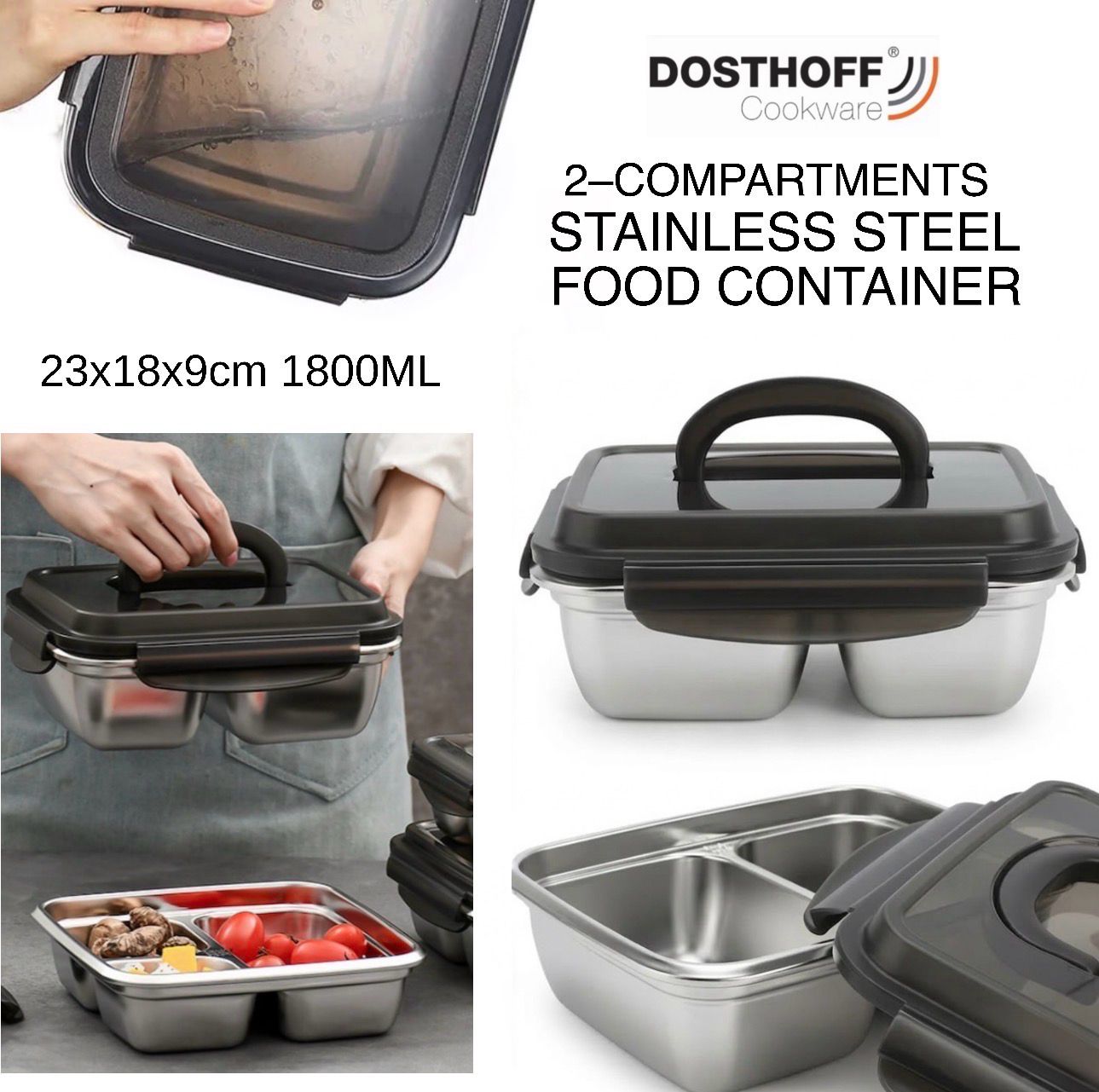
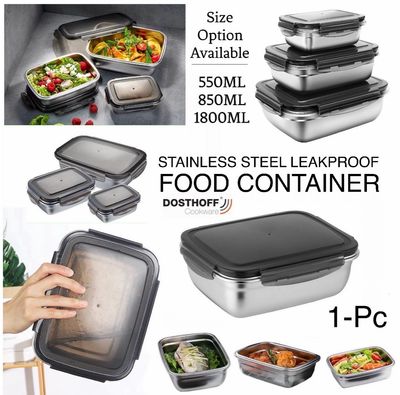
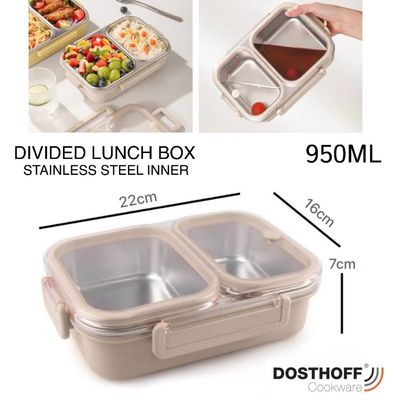
Microwave Safe! Just remove the cover first. Size: 23 x 18 x 9 cm Made of high quality Stainless Steel 18/10 both food safe and rustfree 100% Leak proof thanks to the silicon rim and the 4 locks cover Put hot food in it and store in the fridge, and easily put it in the microwave (remove the cover first) to get your food ready! Magic Food Container from Dosthoff Innovate: Food safe- Rust Free - Break Free - Leak Proof - Microwave Safe!
Model: GDF/VIN/SM1800C
Common question from our customers
How’s this item microwave safe and its stainless steel?
It’s completely understandable why people are skeptical! For decades, the golden rule of kitchen safety has been "never put metal in the microwave." Seeing a stainless steel container labeled "microwave safe" feels like a trap.
However, the science of microwaves has evolved, and so has the design of high-end food storage. Here is how you can explain the "magic" of microwave-safe stainless steel to others.
1. The "Smooth Geometry" Secret
The biggest danger with metal in a microwave is arcing (sparks). This usually happens with thin, jagged, or pointed metal (like aluminum foil or a fork) because electrons "bunch up" at sharp points and jump through the air.
* The Design: Modern microwave-safe steel containers, like the SUS 304 (18/8 stainless steel) ones in your photo, are designed with thick, rounded edges and smooth surfaces.
* The Result: There are no sharp points for electrons to accumulate, so the electricity flows smoothly around the metal without sparking.
2. SUS 304 Material Properties
The SUS 304 stamp on your container is key. This is a high-quality, non-magnetic (or very weakly magnetic) austenitic stainless steel.
* Unlike iron or some cheaper steels, SUS 304 does not react as violently to electromagnetic fields.
* The manufacturers have engineered the thickness and composition specifically to reflect microwaves safely into the food rather than absorbing them into the metal itself.
3. How to Use It Safely (The "Rules")
To convince others, show them that safety depends on following specific manufacturer guidelines:
* Remove the Lid: Most lids contain plastic or silicone seals that might not be heat-rated the same way, or they may create a pressure seal that causes an explosion.
* One at a Time: Never put two metal containers in at once; if they touch or get too close, they can create an arc between them.
* Don't Touch the Walls: Ensure the container is placed in the center and doesn't touch the metal interior walls of the microwave.
* Food Must Be Present: Never "microwave" an empty metal container. The food acts as a heat sink for the energy.
> Pro-Tip: If they still don't believe you, you can suggest a "Small Scale Test." Put the container in with a cup of water inside for 30 seconds. They will see that there are no sparks and the water gets warm!
من الطبيعي جداً أن يشعر الناس بالارتباك! فمنذ عقود والقاعدة الذهبية لسلامة المطبخ هي "عدم وضع المعدن في الميكروويف أبداً". رؤية حاوية من الفولاذ المقاوم للصدأ (الستانلس ستيل) مكتوب عليها "آمنة للميكروويف" تبدو وكأنها فخ.
ومع ذلك، فقد تطور علم الميكروويف وتصميم أوعية حفظ الطعام بشكل كبير. إليك كيف يمكنك شرح "سحر" الستانلس ستيل الآمن للميكروويف للآخرين:
١. سر "الهندسة الناعمة"
الخطر الأكبر من وضع المعدن في الميكروويف هو التفريغ الكهربائي (الشرر). يحدث هذا عادةً مع المعادن الرقيقة أو المسننة أو المدببة (مثل ورق الألمنيوم أو الشوكة) لأن الإلكترونات تتجمع عند النقاط الحادة وتنتقل عبر الهواء.
* التصميم: صُممت حاويات الستانلس ستيل الحديثة الآمنة للميكروويف، مثل حاويات SUS 304 الموجودة في صورتك، بـ حواف سميكة ومستديرة وأسطح ناعمة.
* النتيجة: لا توجد نقاط حادة لتتراكم فيها الإلكترونات، لذا تتدفق الكهرباء بسلاسة حول المعدن دون التسبب في شرارات.
٢. خصائص مادة SUS 304
ختم SUS 304 الموجود على حاويتك هو المفتاح. هذا النوع من الفولاذ عالي الجودة وغير مغناطيسي (أو مغناطيسيته ضعيفة جداً).
* على عكس الحديد أو بعض أنواع الصلب الرخيصة، لا يتفاعل SUS 304 بعنف مع المجالات الكهرومغناطيسية.
* قام المصنعون بهندسة السماكة والتركيبة خصيصاً لتعكس الموجات بأمان إلى الطعام بدلاً من امتصاصها في المعدن نفسه.
٣. كيفية الاستخدام بأمان (القواعد)
لإقناع الآخرين، وضح لهم أن السلامة تعتمد على اتباع إرشادات الشركة المصنعة المحددة:
* إزالة الغطاء: غالباً ما تحتوي الأغطية على مواد بلاستيكية أو سيليكون قد لا تتحمل الحرارة بنفس الدرجة، أو قد تخلق ضغطاً يؤدي لانفجار الغطاء.
* قطعة واحدة فقط: لا تضع حاويتين معدنيتين معاً أبداً؛ فإذا تلامستا أو اقتربتا جداً، فقد ينشأ قوس كهربائي بينهما.
* عدم لمس الجدران: تأكد من وضع الحاوية في المنتصف بحيث لا تلمس الجدران المعدنية الداخلية للميكروويف.
* يجب وجود طعام: لا تقم أبداً بتشغيل الميكروويف والحاوية المعدنية فارغة، فالطعام يعمل كمستقبل للطاقة والحرارة.